Chilli is hot. Chilli can make burning sensasion. Many kind of species of chilli in the world. But in this cause I will tell you about :
Capsaicin
(8-methyl-N-vanillyl-6-nonenamide,(CH3)2CHCH=CH(CH2)4CONHCH2C6H3-4-(OH)-3-(OCH3))
is the active component of chili peppers, which are plants belonging to the genus Capsicum. It is an irritant for mammals, including humans, and produces a sensation of burning in any tissue with which it comes into contact. Capsaicin and several related compounds are called capsaicinoids and are produced as a secondary metabolite by chili peppers, probably as deterrents against certain herbivores and fungi. Pure capsaicin is a hydrophobic, colorless, odorless, crystalline to waxy compound.
Capsaicin compound was first extracted (albeit in impure form) in 1816 by Christian Friedrich Bucholz (1770–1818). He called it "capsicin," after the genus Capsicum from which it was extracted. Capsaicin was first isolated in pure, crystalline form in 1876 by John Clough Thresh (1850–1932), who gave it the name "capsaicin". In 1873 German pharmacologist Rudolf Buchheim (1820–1879) and in 1878 the Hungarian doctor Endre Hőgyes stated that "capsicol" (partially purified capsaicin) caused the burning feeling when in contact with mucous membranes and increased secretion of gastric juice. The structure of capsaicin was partly elucidated by E. K. Nelson in 1919. Capsaicin was first synthesized in 1930 by E. Spath and S. F. Darling. In 1961, similar substances were isolated from chili peppers by the Japanese chemists S. Kosuge and Y. Inagaki, who named them capsaicinoids.
Capsaicin is present in large quantities in the placental tissue (which holds the seeds), the internal membranes and, to a lesser extent, the other fleshy parts of the fruits of plants in the genus Capsicum. The seeds themselves do not produce any capsaicin, although the highest concentration of capsaicin can be found in the white pith around the seeds. The seeds of Capsicum plants are predominantly dispersed by birds. Birds do not have the receptor to which capsaicin binds, so it does not function as an irritant for them. Chili pepper seeds consumed by birds pass through the digestive tract and can germinate later, but mammals have molars, which destroy seeds and prevent them from germinating. Thus, natural selection[citation needed] may have led to increasing capsaicin production because it makes the plant less likely to be eaten by animals that do not help it reproduce. There is also evidence that capsaicin evolved as an anti-fungal agent, and capsaicinoids are broadly anti-microbial. In 2006, it was discovered that tarantula venom activates the same pathway of pain as is activated by capsaicin, the first demonstrated case of such a shared pathway in both plant and animal anti-mammal defense.
Here, 10 things you should know about capsaicin:
1.Capsaicin is the active component of chili peppers.
Capsaicin is actually an irritant to humans, producing a burning sensation in any tissue it touches. Capsaicin works by depleting or interfering with substance P, a chemical involved in transmitting pain impulses to the brain. The properties of capsaicin make it an option for relieving pain associated with osteoarthritis, rheumatoid arthritis, and diabetic neuropathy. Capsaicin is used to relieve muscle pain, joint pain, or nerve pain.
2.Capsaicin is available over the counter.
You do not need a prescription for capsaicin from your doctor. You can find products containing capsaicin in your drugstore for over-the-counter purchase. You should follow the directions given by your doctor or the directions on the label (there are different dosages or strengths of capsaicin available). For pain relief, capsaicin is usually used 3 or 4 times a day. You should rub the capsaicin cream or gel into the painful area until no more cream is visible on the skin.
Wash hands thoroughly after applying capsaicin to other areas of the body. If the capsaicin was applied for hand pain, however, wash your hands after 30 minutes.
3.Don't use extra doses of capsaicin.
Stick to the directions, but if you should inadvertently miss a dose, use it as soon as you remember -- unless it's close to the time of the next dose.
4.Capsaicin has no known drug interactions.Though there are no recognized drug interactions with capsaicin, ask your doctor to be sure that you can use capsaicin, and continue to take your current medications. It's important to inform your doctor about any products you are using.
5.Capsaicin may cause a burning sensation.
You will likely experience a warm, burning, stinging sensation when you begin using capsaicin. The sensation, which is expected when beginning use, may actually continue for 2 to 4 weeks. The sensation should lessen the longer you use capsaicin. Reducing the number of daily doses of capsaicin will not reduce the sensation, but it may reduce the pain relief achieved.
6.Arthritis pain relief is not immediate.
Even with regular use of capsaicin, arthritis pain relief will take some time. Pain relief from arthritis typically is evident 1 to 2 weeks after starting capsaicin. To prevent pain from returning, capsaicin must be continued. However, if pain is not better after using capsaicin for 3 or 4 weeks, talk to your doctor. It may not be worth it to continue.
7.Capsaicin must be handled with care.Be aware of what can happen if you get capsaicin in your eyes or on other sensitive body parts because of the burning sensation it causes. If capsaicin gets in your eyes, immediately flush your eyes with water. To rid other sensitive areas of capsaicin and the burning feeling, wash the areas with warm soapy water. Keep capsaicin out of reach of children.
8.Some people should not use capsaicin.There are warnings about using capsaicin under certain circumstances. Before using capsaicin, tell your doctor about:
* broken skin
* skin irritation
* previous allergic reactions to capsaicin, hot peppers, other drugs, dyes, foods, preservatives
* breastfeeding
* pregnancy or current attempts to become pregnant
Also, be aware that capsaicin should not be used by children under 2 years of age.
9.Research supports use of capsaicin for osteoarthritis and rheumatoid arthritis.A study from 1991 involved 70 osteoarthritis patients and 31 rheumatoid arthritis patients. Patients were instructed to apply 0.025% capsaicin or placebo to painful knees, four times a day. Results revealed that 80% of patients treated with capsaicin experienced pain reduction following two weeks of treatment.
10.Research also supports the use of capsaicin for osteoarthritis of the hands.Capsaicin 0.075% was evaluated for osteoarthritis and rheumatoid arthritis in a 4-week study, published in 1992. All of the study participants had significant hand pain and applied capsaicin to their hands 4 times daily. It was found that capsaicin reduced tenderness and pain in osteoarthritis of the hand patients, but not rheumatoid arthritis patients when compared to placebo.
Scoville
The Scoville scale is a measurement of the spicy heat (or piquance) of a chili pepper. The number of Scoville heat units (SHU) indicates the amount of capsaicin present. Capsaicin is a chemical compound that stimulates chemoreceptor nerve endings in the skin, especially the mucous membranes. The scale is named after its creator, American chemist Wilbur Scoville. His method, devised in 1912, is known as the Scoville Organoleptic Test. The modern commonplace method for quantitative analysis uses high-performance liquid chromatography, making it possible to directly measure capsaicinoid content.
The chilis with the highest rating on the Scoville scale exceed one million Scoville units, and include specimens of naga jolokia or bhut jolokia and its cultivars, the "Dorset naga" and the "Ghost chili," neither of which has official cultivar status. The Naga Viper currently holds the unofficial title for hottest pepper. It was produced in the UK by crossing the three hottest peppers known to the world, including the Bhut jolokia. Researchers at Warwick University tested the Naga Viper and found that it measures 1,359,000 on the Scoville scale. It should be noted that a chilli trial carried out by a team from the BBC's Gardeners' World programme put the heat value of Dorset Naga at a staggering 1.6 million SHU. Those levels were tested by Warwick HRI. However, this is not the average Scoville Heat Unit level of the pepper, nor was this submitted to any world record holder. Numerical results for any specimen vary depending on its cultivation conditions and the uncertainty of the laboratory methods used to assess the capsaicinoid content.
Chilli by Zero Scoville Heat UnitsBell Pepper, Cubanelle, Aji Dulce ( have 0 point of SHU )
 |
| Bell Pepper |
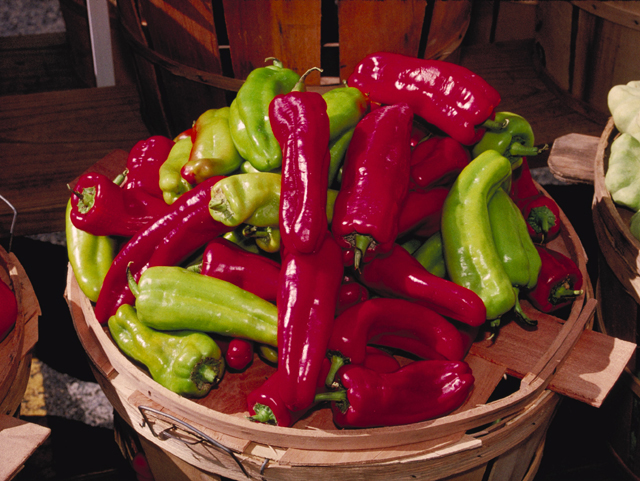 |
| Cubanelle |
|
 |
| Aji Dulce (They're sweet, not spicy) |